Cadouin, Dordogne, France
It seems fitting that the statue on the main street outside the Abbey Church offers a blessing - for this was a much visited site by pilgrims .
It may also have been this blessing that protected the local Resistance fighters who wrought havoc on the occupying German force at the end of WWII.

Photo© Traumrune / Wikimedia Commons
The twist of history
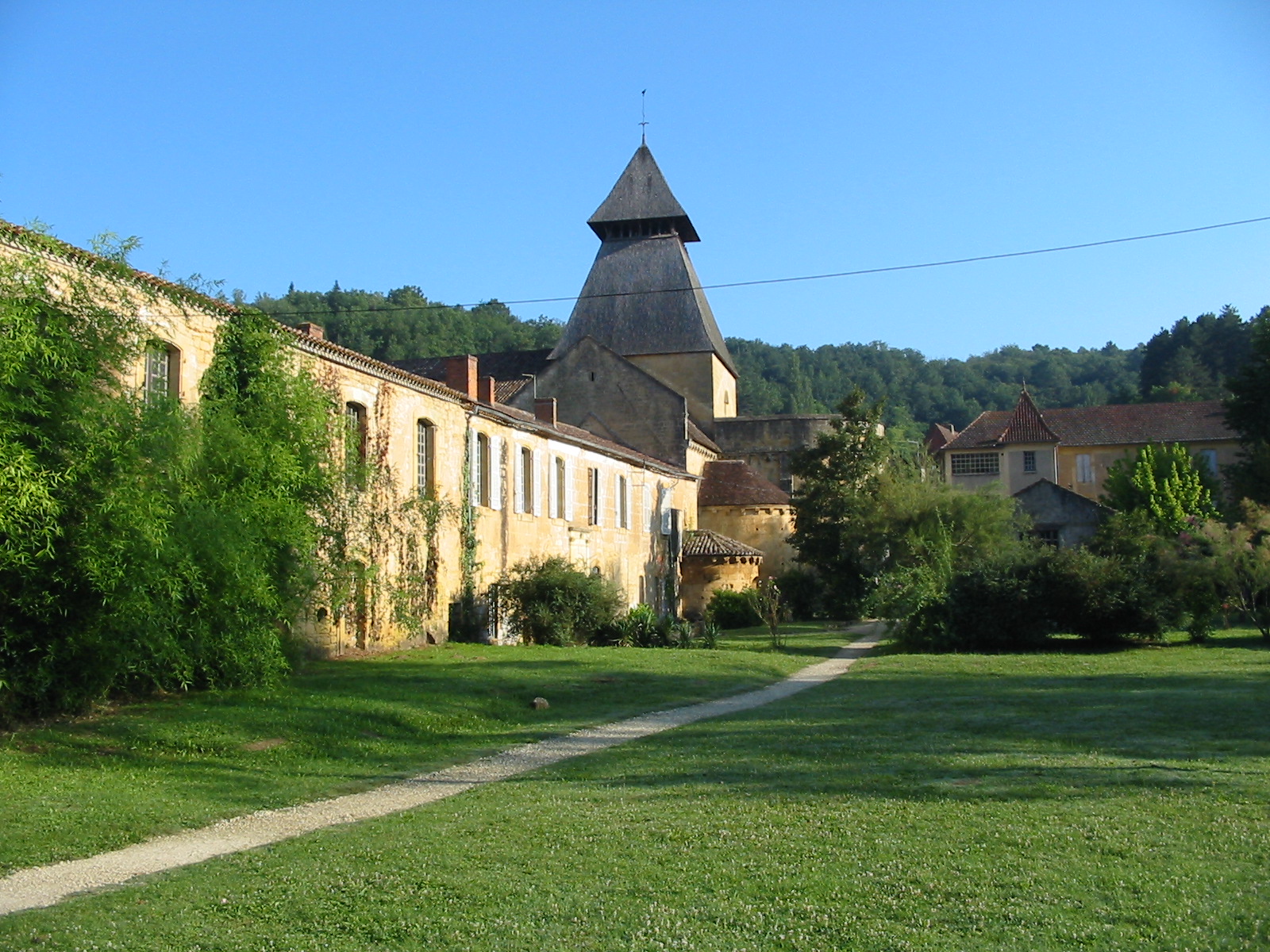
In some ways the village of Cadouin reflects much of France’s ecclesiastical history: There are various attributed sources of the arrival of the “Shroud of Cadouin” which was reputedly the death face cloth of Jesus Christ.
The "relic" had so many variations of its source and history - many of which seemed to remarkably echo that of the many miraculous rescue and hiding adventures of the Turin shroud throughout the destruction of its many resting places - that it's authenticity would have seemed doubtful if one had not been intent on venerating some “thing” rather than the word of Jesus himself.
Recent analysis by French scientific laboratories that specialise in archaeological and patrimonial heritage, has demonstrated that far from its attributed lineage, it is actually a piece of Muslim woven cloth from a much later century.
The Abbey’s own website names the scientific expertise of Chanoine P. Sabatier (1934), of the Guimet Museum, Paris in examination of the relic. The Guimet is definitely worth a visit in real life -and if not possible – online
I read that the Director of Cairo’s Coptic Museum noted a woven inscription in the band of the Cadouin cloth which apparently translated to be:
“Mohamed is the prophet of God and Ali is God’s friend,”
and the record when on to state that this was a standard Shiite Muslim invocation.
Reputedly this was a cloth woven especially for the vizier of the Caliph of Cairo who engaged with the Crusaders after their successful siege of Antioch in 1098. It seems fitting in a way, that this shawl made its way to a Christian residence for centuries to follow, for the Caliph sent an embassy of the Fatimads to the Crusaders to congratulate them on their victory against their rivals and stress their friendliness to Christians.
So, somehow it seems that the universe intervened to have people of different faith inadvertently share in worship for decades to come.
The original cloth is kept in the "Musée d'art et d'archéologie du Périgord" but a copy is able to be seen in a display in the museum next to the cloister.
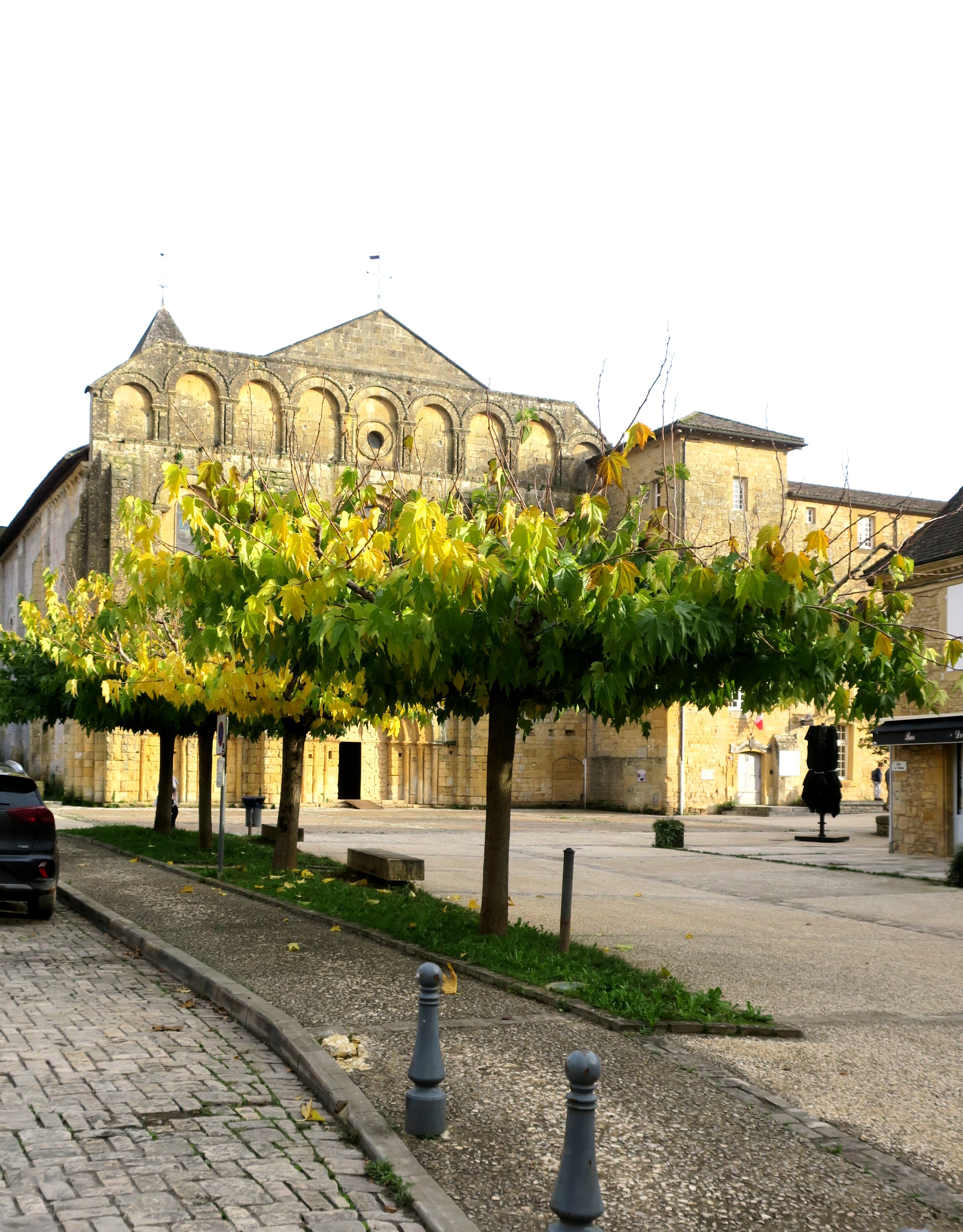
Whatever it’s true genealogy it became a source of pilgrimage and of enrichment of the abbey of Cadouin, drawing the paths of Compostela to pass through it on the age-old pilgrims’ route across Europe to the far Spanish coastal town of Santiago de Compostela.
In that way our famous "relic" vastly enriched the abbey.
Cadouin Abbey itself was founded in 1115 but dissolved in 1791. We now visit a site under ownership of the Département, which offers many cultural events and courses here.


A medieval covered market for the fresh produce and a mill stream to serve the abbey are well placed historical village assets.
 |
 |
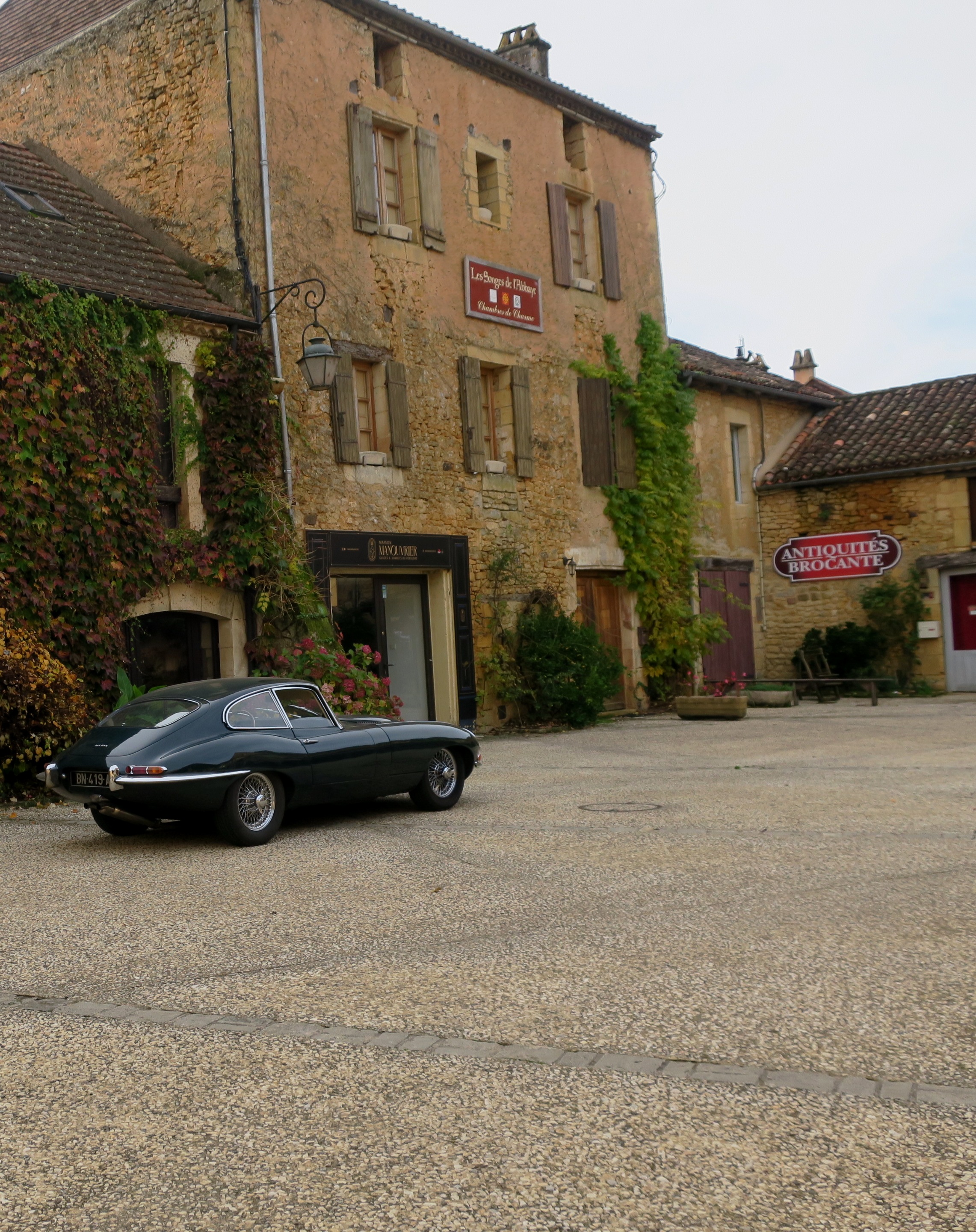
..and in the art galleries and outside,
there is style in Cadouin
 |
 |
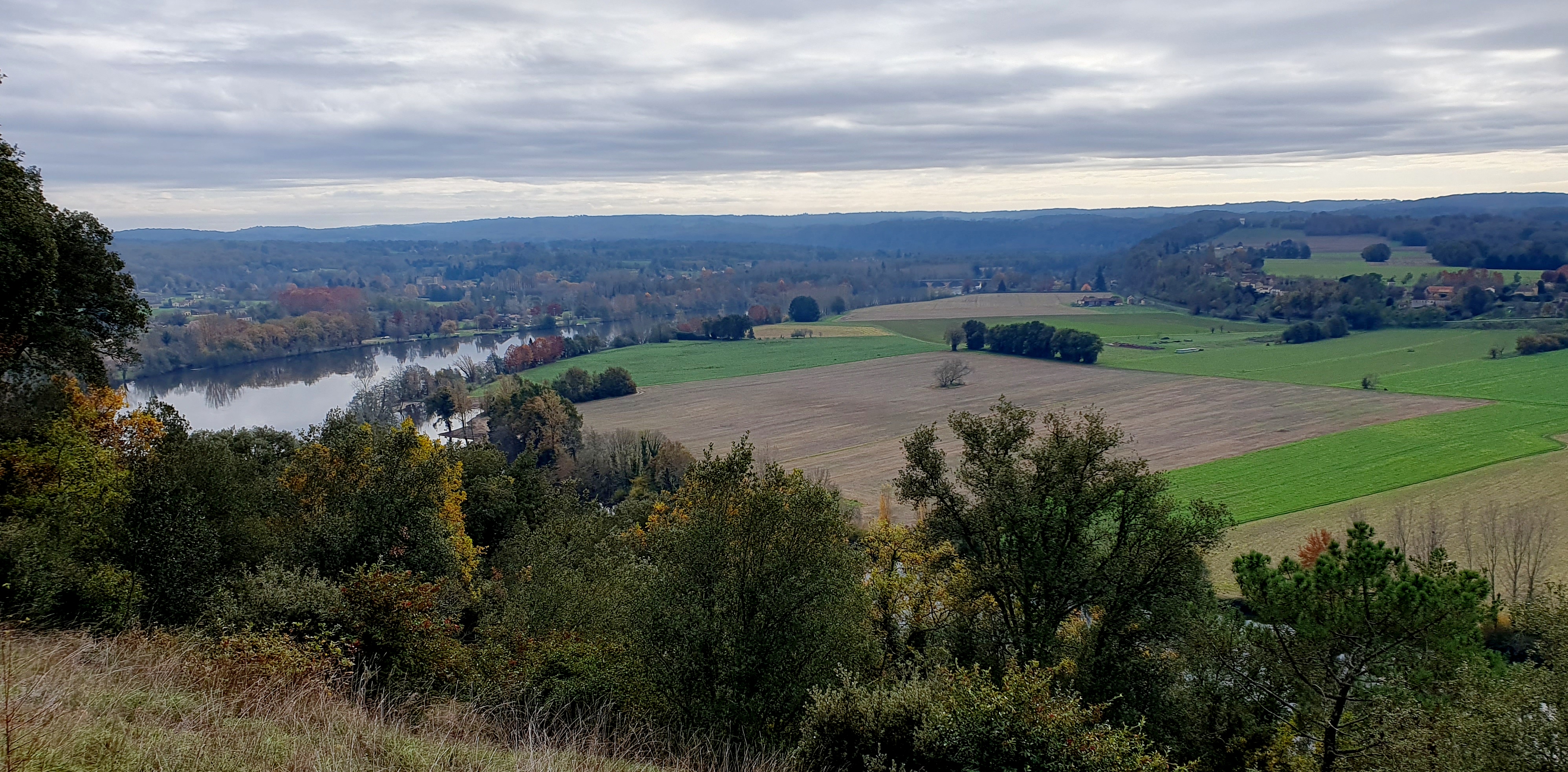
The hills above Cadouin

If you just ignore lines on a map and ecclesiastical variations, just driving through this lovely area of the Dordogne is rewarding enough.
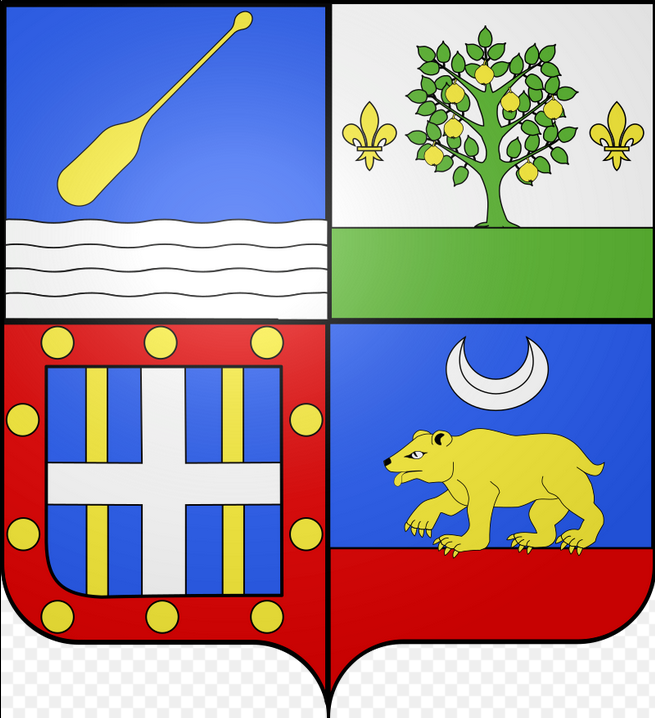
The commune of Le Buisson de Cadouin is also a composite history of the drawing and redrawing of administrative lines across France.
According to Wikipedia:
“In 1893, the commune of Cabans was renamed Le Buisson.
In 1960, Cussac and Le Buisson merged to form Le Buisson-Cussac.
In 1974, the communes Cadouin, Le Buisson-Cussac, Paleyrac and Urval merged and formed the new commune Le-Buisson-de-Cadouin.
Urval separated in 1989. "
There is no record of a divorce settlement...But the coat of arms was already drawn - so Le Buisonn de Cadouin kept the Urval bear!
We stayed three wonderful months in Urval when we arrived in France. It is a little jewel bypassed by the tourists and given a short, terse paragraph in Wikipedia…but a place of great peace and beauty and not a small amount of history of its own, as seen on my page on Urval.
A Romanesque façade and UNESCO listing

In 1998 Cadouin Abby was declared a UNESCO heritage site along the Camino de Compostela. The architecture is a mix of a Romanesque church with a more gothic cloister which was rebuilt at the end of the 15th century.
The abbey was originally created in 1115, and joined the Cistercian order in 1119. The Cistercians followed the Benedictine tradition of hospitality.
That welcome is felt when visiting here – and the tradition of hospitality extends still with a delightful Youth Hostel here for travellers.
There are no longer monks to welcome us but the area tends to wrap itself warmly around you as you wander…echoing the Rule of St Benedict 53:
“Let all guests who arrive be received as Christ.”
The Master Builder was Jean Ferrier of Sarlat: it is always to remember the artisans who left us our heritage.
The abbey has seen its share of suffering. In the Hundred Years War between 1337 and 1453 it was attacked, burned, and pillages by the English, before a second attack from the French following the Revolution and the dissolution of the monasteries. At that time much of the beautiful stained glass was sold in 1791 and its archives dispersed to places undocumented.
Sadly the library contents were burned in the square. As a lover of books, such stories always grieve me - for who knows what treasures were lost. But such events have a difefrent effect than that intended. As Ralph Waldo Emersonwrote:
Every burned book enlightens the world.
Gothic Interior

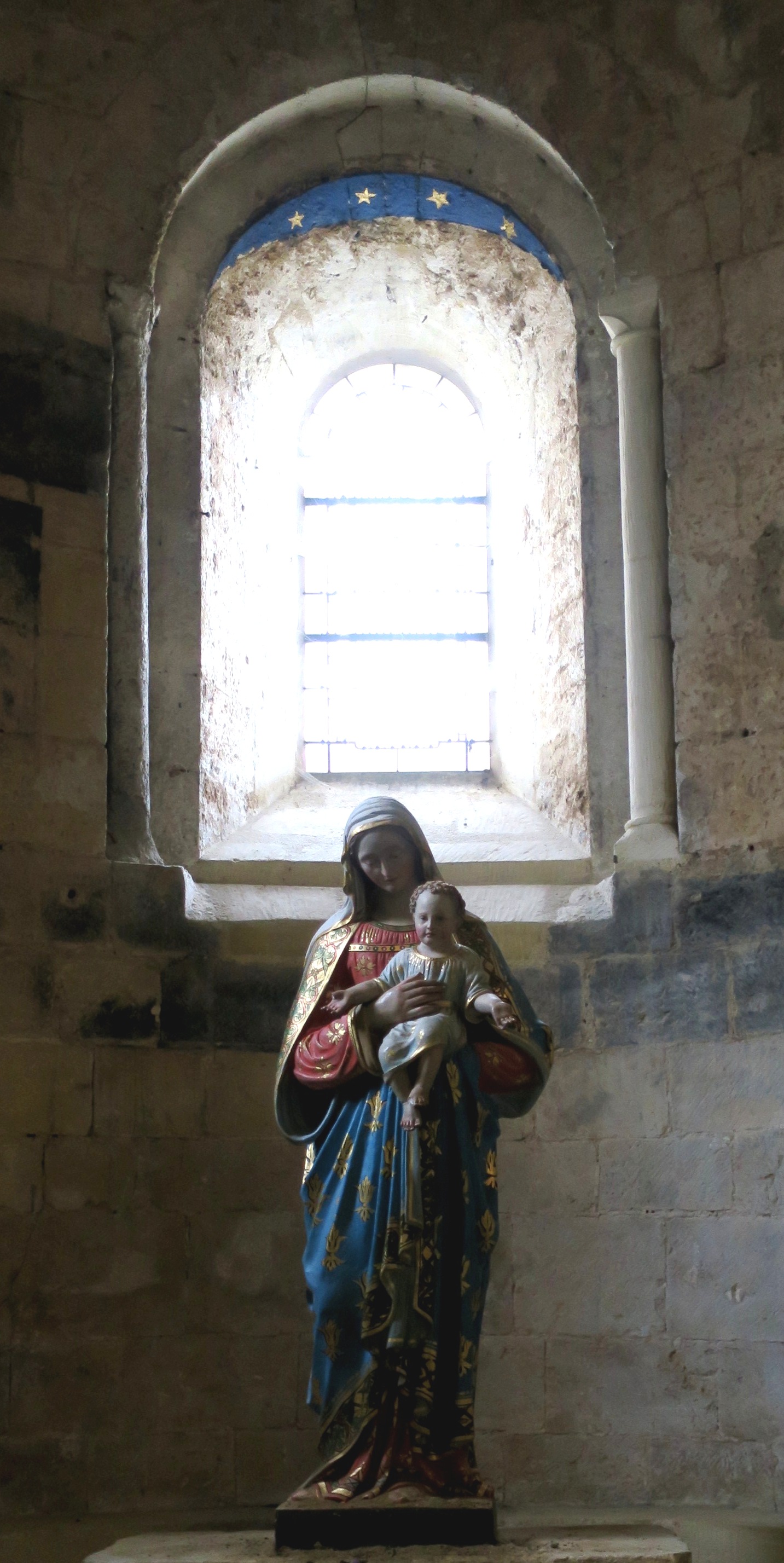 |
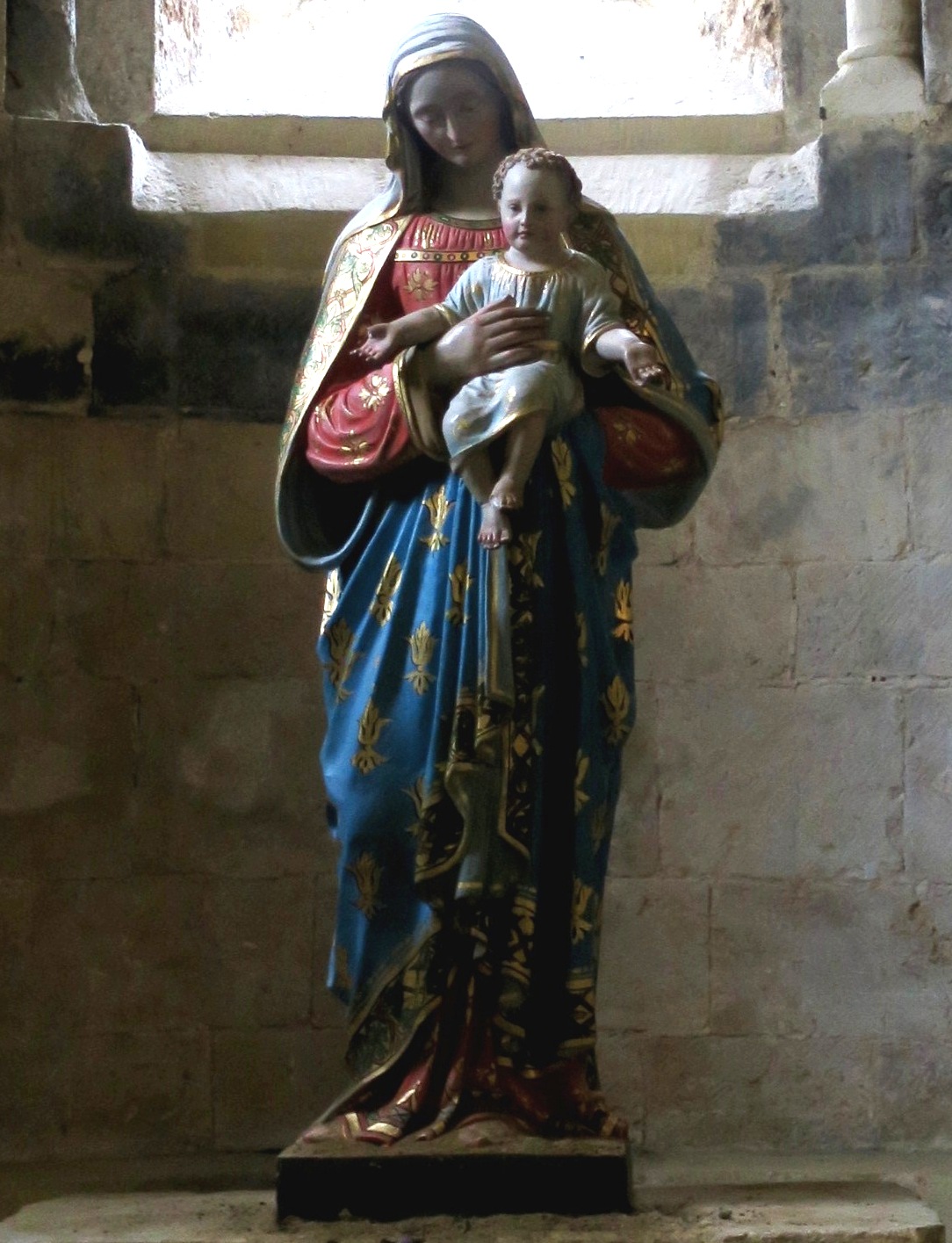 The setting of this statue is rather lovely, with its star studded canopy over the arched window, but the detail and colour is so rich. Where the material ends, art begins. Étienne Hajdú Hungarian-born French sculptor1907-1996 |
Fading Frescoes
 |
 |
Traces of early history remain - fading frescoes and a former wall safe beside a date inscription of 1607
 |
 |

..and vivid fresco colours

The domed ceiling is exquisite in detail - and rich in colour.
 |
 |


...and even the finest art and detail in the door locks.
A single blow of a blacksmith
is equal to a hundred blows of a goldsmith.
Indian Proverb
.
Cloisters with carvings
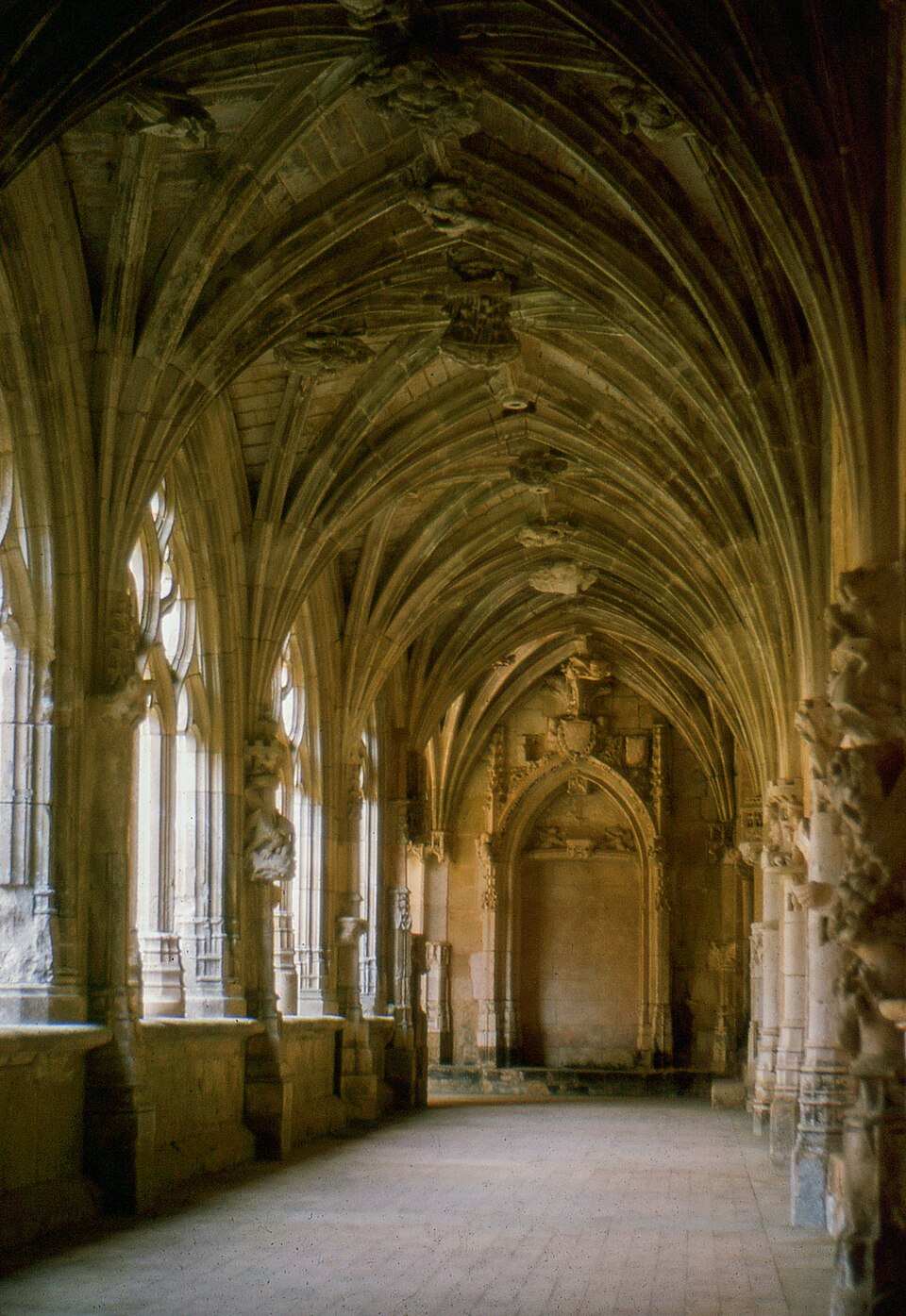
Photo: Daniel VILLAFRUELA, CC BY-SA 4.0 <https://creativecommons.org/licenses/by-sa/4.0>, via Wikimedia Commons
The 900 square metre cloister (1076,39 square yards) is of a later era and replaces the earlier Romanesque construction. It was started in 1490 and finally completed 25 years later, in 1512.
In the words of architect Luis Barragán :
Any work of architecture that does not express serenity is a mistake.
There is real elegance in the carved ornamentation with well-crafted human figures alongside fantastic creatures, leafy friezes, decorative filials, and twisted smaller columns.
It is thought that, as was the fashion of the time, the faces are depictions of local residents or vignerons, as they are factitiously interwoven with the creation story and lions and griffons.
Here is a lovely video of the cloister area, candlelit.
Youth Hostel Cadouin
 |
 |
Communal dining - a cat guardian to your room, and a courtyard where you can go with your dog - if on a lead.
 |
 |
French Resistance in Cadouin in WWII
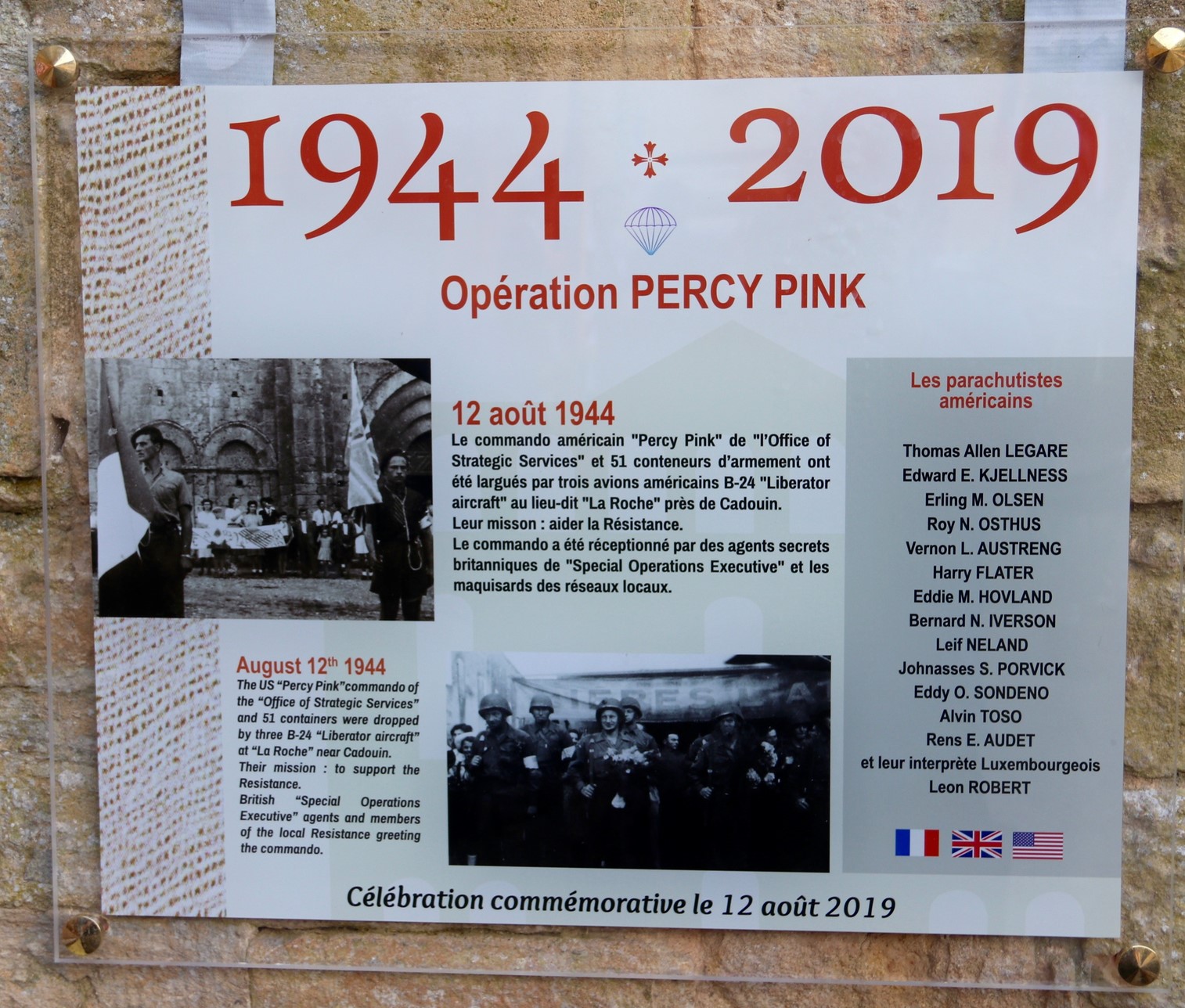
A little recognised tribute to valour is a small plaque beside the entrance to the abbey.
With thanks to US War Memorials:
"The plaque remembers Operation Percy Pink which was an Office of Strategic Services (OSS) by Operational Group Pat lead by 1st Lt. Thomas A. Legare with the mission to work the Maquis (French Resistance) in the Dordogne Department, as well as the British Special Operation Executive (SOE) in August 1944."
Operation Carpetbagger delivered the team and supplies, leaving from Harrington RAF base near Kettering in Northamptonshire, which had been assigned to the US Army Air Forces Eighth Air Force Group, The plaque is written in French and English and was placed there during a commemorative service in 2019. The English reads:
1944 -2019
Operation Percy Pink
August 12th 1944
The 13 US "Percy Pink" commandos of the "Office of Strategic
Services" and 51 containers were dropped by three B-24 "Liberator
aircraft" at "La Roche" near Cadouin. Their mission : to support the Resistance, British
"Special Operations Executive" agents and members of the local
Resistance.
Here is a short and very moving trailer for the documentary of the operation and the brave local resistance families and individuals many of whom, when their own region was liberated, went on to the coast to defend the Charente Maritime area around La Rochelle and Île d’Oléron.
It is with great respect we listen to some of the survivors.
War memorial

The War memorial in Cadouin is unprepossessing.
I have not been able to discover the significance of the stones against which memorial plaques have been placed., but it is quiet and thoughtful place and possibly more fitting than something sculptured.
Most important is that is holds memory.
As Samuel Butler said:
To die completely, a person must not only forget but be forgotten,
and he who is not forgotten is not dead.
Your second block of text...