Urval, Dordogne

There has been settlement in the now quiet village of Urval since the Romans in 1BCE, when they created a temple to the springs that here swell to a small stream, now known as the Peyrat. The celtic term for water is "Ur" - hence the name.
With the arrival of Christianity, the temple was modified to form a Sanctuary in the 8th century. The marble columns of the original building are now within the village church. By the 11th century, Urval was included in the lands of the then all-powerful Count of Toulouse. By the 12th century Urval fell under the spiritual and day-to-day management of the Cistercain monks of Cadouin. until in 1152, with the marriage of Eleanor to Henri Plantaganet the region became Aquitane under the British Crown.

This village was our first home after moving to France and we stayed in a marvellously comfortable gite here with Balu, our Chow Chow.
Contact the Mairie -or me- for their direct contact - our hosts were truly lovely.

 |
 |
The place was a delightful base for house-hunting across a huge area we had selecetd for microclimates - and even reminded me of my two sheep in the fields of my B&B in Australia who were called Baa and Bleet - and won best fleece in the distict.
Here, there are two communal sheep called Gloria and Pisselit - and they help maintain the green common spaces.
It is a truly peaceful place. The tall roofs are typical of the Périgord and an unusual remaining piece of history is the communal bread oven - still operative and used for the Village Fair each year, courtesy of a baker in Siorac and his family.
"Four banal" - the community bread oven


In the absence of a stronghold, all places in France came under the jurisdiction of either one of the King’s lords or a member of the high clergy. For Urval, they looked to the Archbishop of Bordeaux – who, like all other lords, was expected to provide to his people a bread oven, a mill, and a press.
The much-hated aspect of this was that the people were forbidden from using any other one of these such facilities and had to pay their master for its use in goods: bread, flour, or wine.
The mill and the bread oven were always located at a distance from each other. This protected the bread oven from flooding and the mill from fire.
In Urval the only vestige of the former press is merely its name along the river course. The mill is no longer operational but is a beautiful residence in the village – with resident white cat who suns himself in the afternoon sunshine at a top window.
The former mill

 |
 |
A village of quiet character
The communal sheep are moved around the village, but today were in the field beside the mill stream, here hiding behind the trees.

  |
  |

Doors of character
 |
 |
Château Bourlie
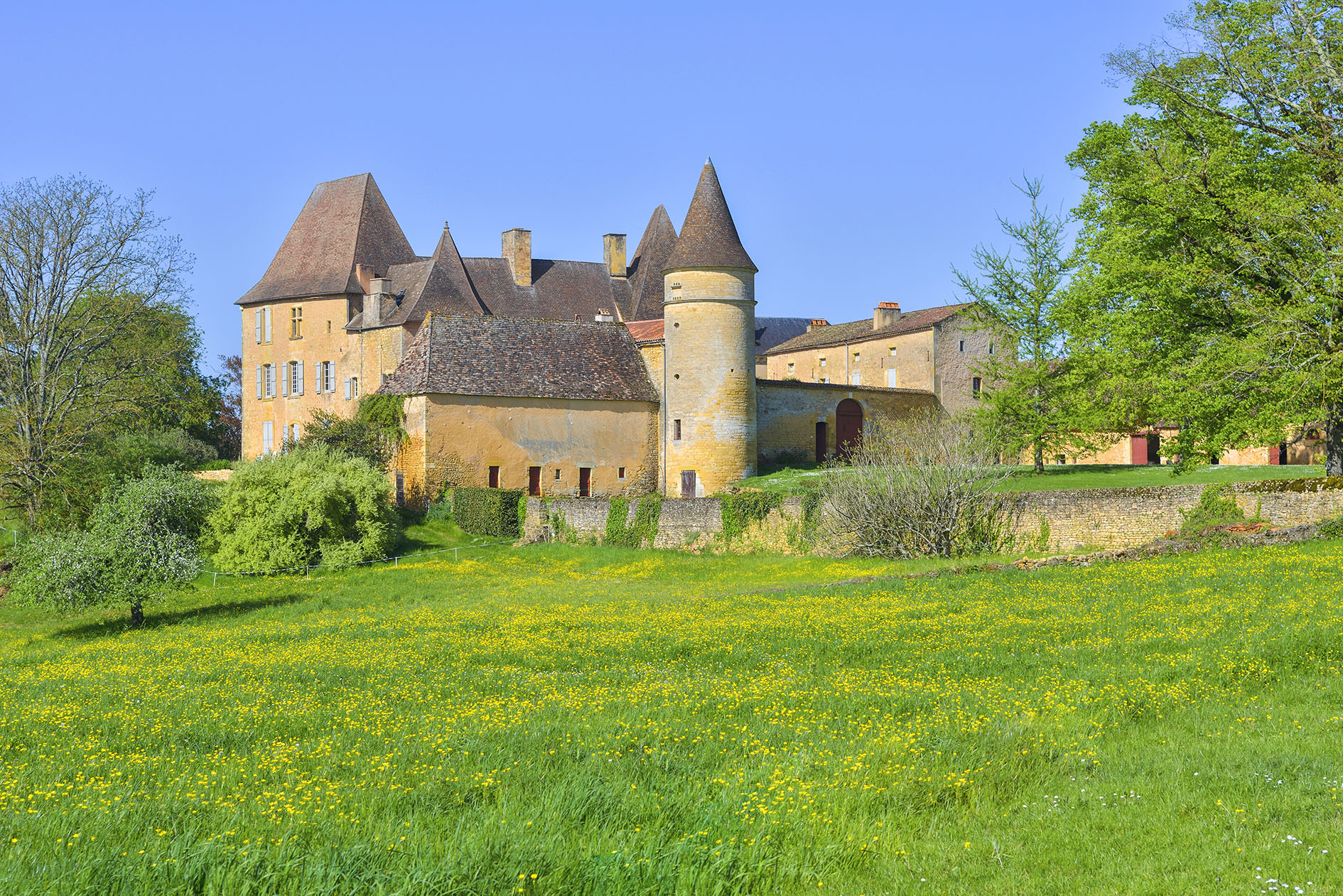
It is a remarkable fact that Château Bourlie has never been sold - being passed down the family for generations over 700 years. Also remarkable in a country of patrimonial inheritance, twice in its history the Château has been headed by a woman - once in the middle ages, and again in the 19th century.
The current owners, who spend their lives between the château and their houseboat in London, have restored the decaying family heritage estate and it is now run as a guest house and venue for amazing art festivals, workshops and seminars that reflect the passions of the owners - Cyril de Commarque, an artist with a passion for architecture and ecology and his wife the writer Ortensia Visconti di Modrone.
Church and safe haven against marauders
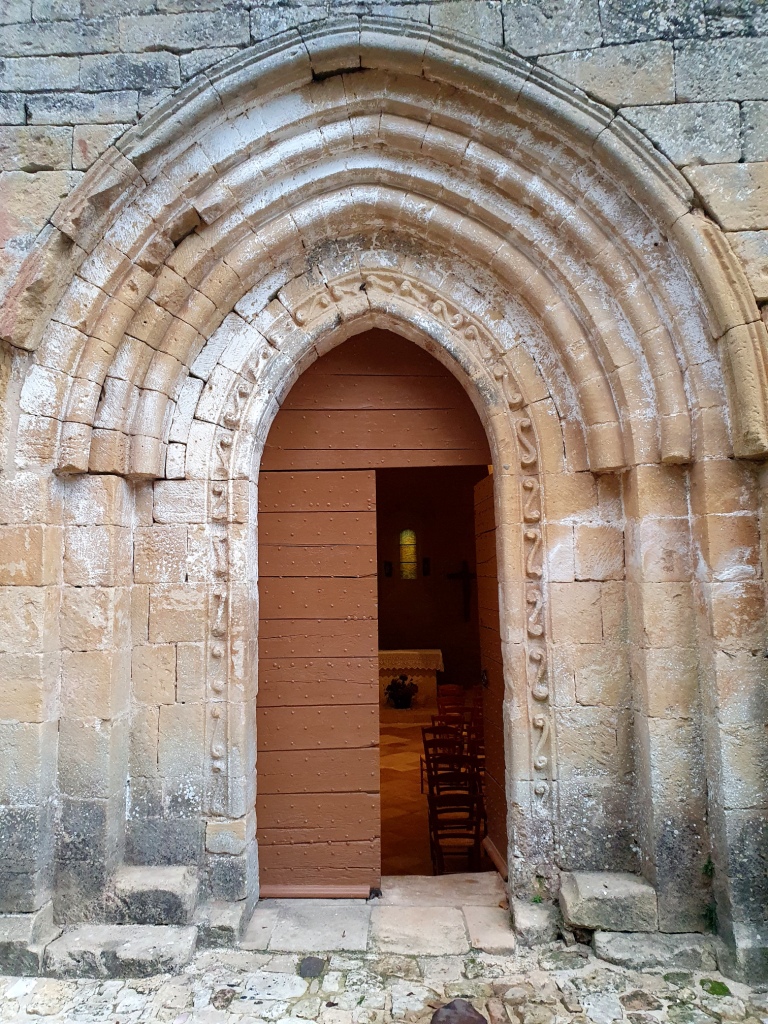
When the original pagan temple was transformed into a Sanctuary in the 8th century it was in the context of roaming bands who frequently attacked villages.
By the 11th century the Sanctuary became a highly fortified church

By the end of the 12th century, roaming bands of marauders were prevalent. Under the feudal laws that were authorised by Charlemagne, the obligation of military duty was reduced from 60 to 40 days to allow agriculture to continue and the population to continue to be fed.
Some didn't want to return to village life and instead formed these bands which were very real threats.
The villagers therefore strengthened the church walls so they wouldn’t collapse and crush those seeking refuge inside.
Attached to the walls were wooden “hoards” which were wooden covered structures allowing stones to be dropped and archers to shoot arrows under shelter.
They also created a “dungeon” which contrary to being underground, was above the church. The entry was on the exterior of the wall and deliberately made so it could be climbed if you were not clad in armour or carrying swords or shields.
When one entered it was necessary to bend low – therefore making an intruder vulnerable to attack by those inside.
That being the case, the resolution of these attackers was often to create a fire in the nave and try to burn those above. Remains of such a fire can be seen inside. The tradition was to cover the ceiling in wooden slats and then cover that with heavy plaster to protect from fires below.
Today the "dungeon" is accessed by an iron staircase.

As the old proverb says:
Better a thousand times careful than once dead.
A simple elegance in design

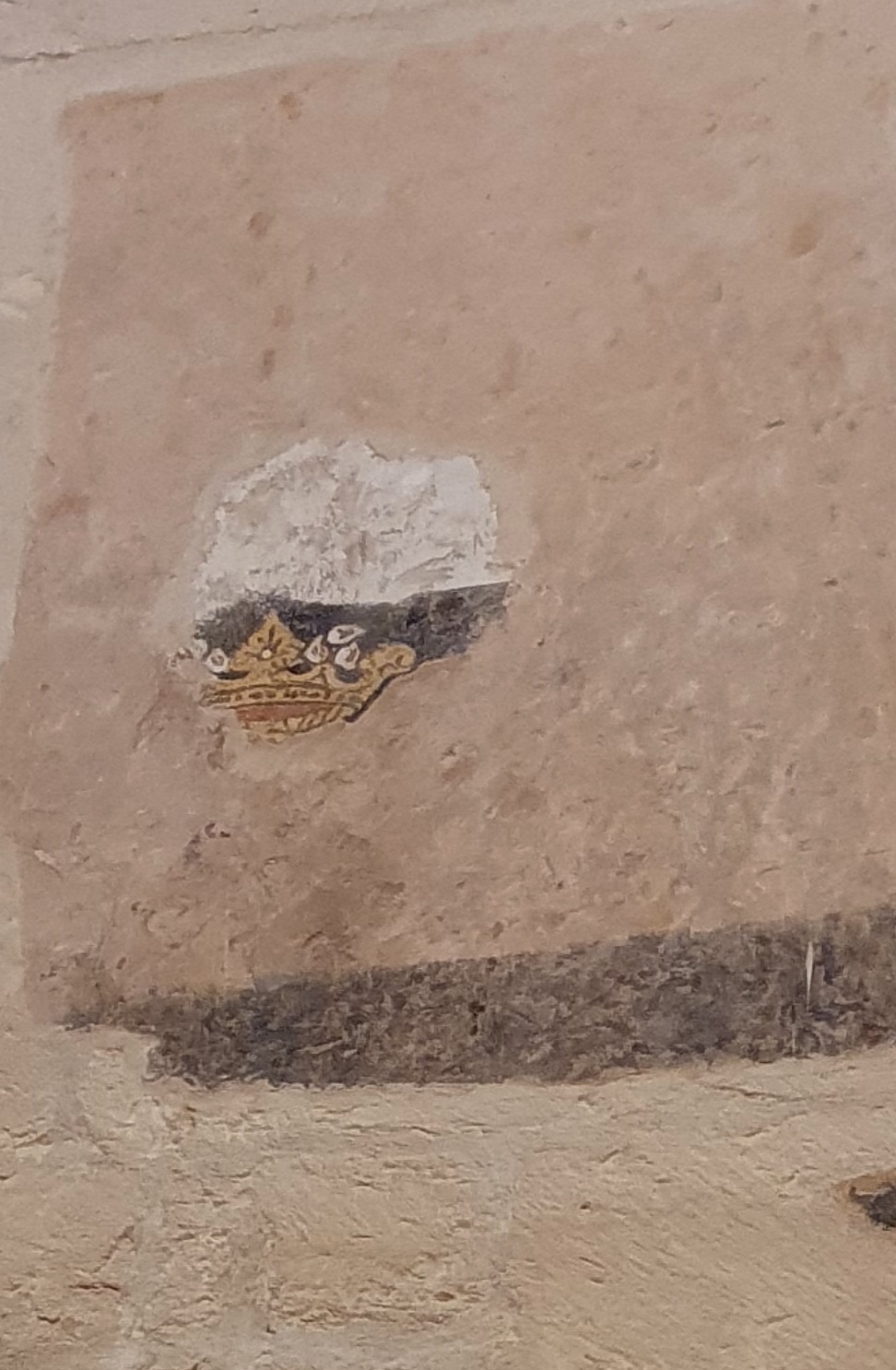
Sculptures, carvings, and frescoes
    |
    |
Stained glass ancient and modern
It is said that we like imperfection because it reminds us of ourselves.
France has long been known for the quality of its stained glass. Even today stained glass is made using the same techniques that create tiny imperfections in the glass. These concentrate or diffuse light and these imperfections give the warmth and character that is unable to be reproduced by modern machine-rolled glass.
The church in Urval, in its modern restoration, features both.
  |
  |
Side chapel in the village church
Village records mention that the side chapel was built in the 19th century. The altar piece was reputedly brought from the then demolished chapel of the Bourlie Castle, on the edge of the village.


A cemetery that moved
Apparently it is recorded that the cemetery in Urval was actually moved from Cadouin and settled near a convent in the village established for the education of girls.
Whether so or not, it is a beautiful location to find a final rest.
 |
 |
But I follow the Tuscarora Native American saying:
They are not dead who live in the hearts they leave behind.
Your second block of text...